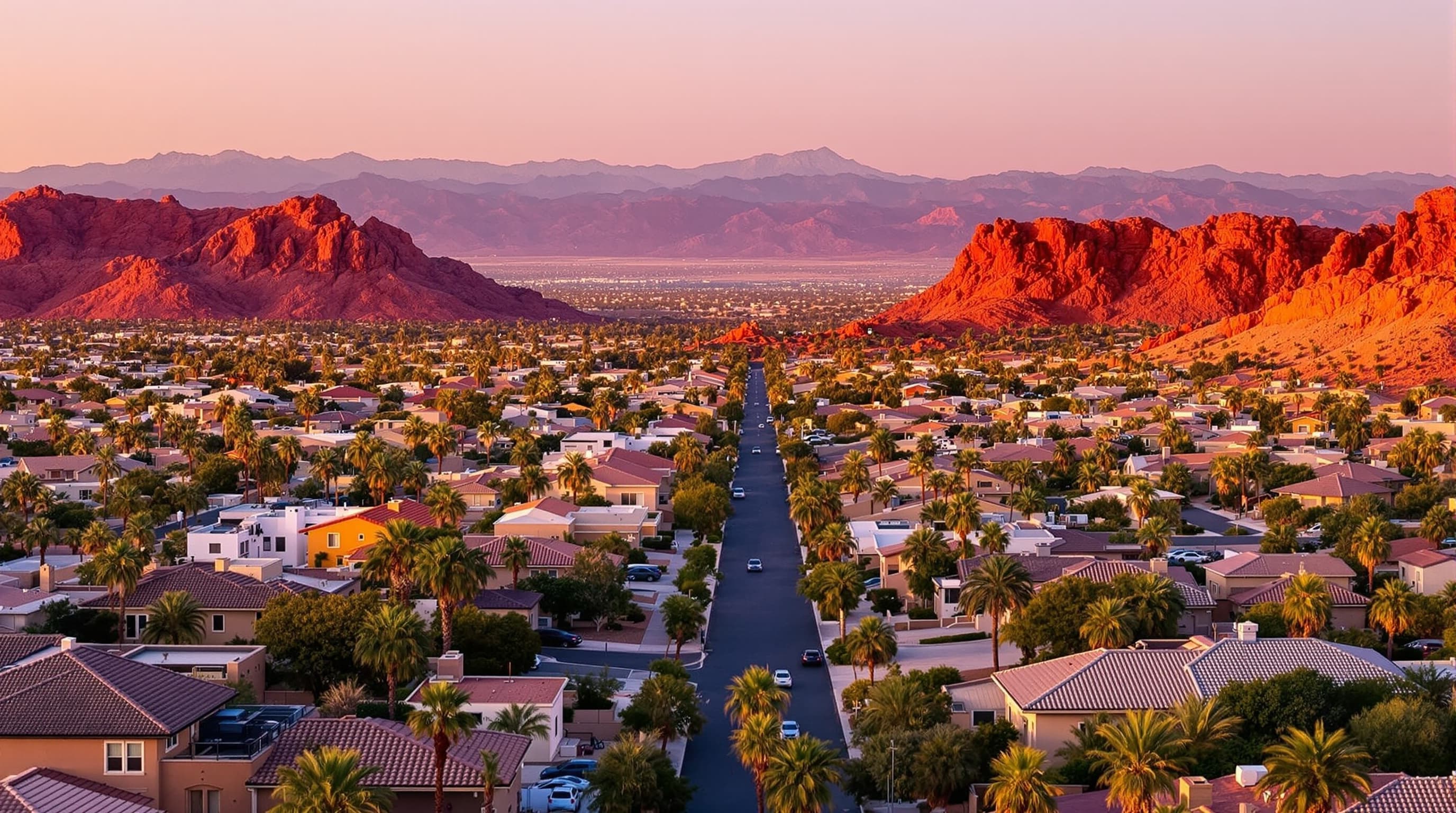
You're not imagining it. That gritty feeling behind your eyelids, the relentless sneezing at 7 AM, the sinus pressure that feels like a Vegas headliner sitting on your face — it's real, and it's intensely local. While tourists are dealing with hangovers, locals are battling a seasonal adversary that feels perfectly engineered to torment us: Las Vegas allergy season.
Forget the "desert air is clean" myth. Our allergy landscape is a perfect storm of historical landscaping mistakes, relentless construction, and punishing climate. And every spring, r/vegaslocals fills with posts asking "are anyone else's allergies going insane right now?" — and the answer is always yes. Let's break down exactly what's trying to invade your sinuses and, more importantly, what you can actually do about it.
The Usual Suspects: What's Actually Pollinating
Our problem isn't a lack of pollen. It's a concentration of the wrong plants in a place they shouldn't be.
The Public Enemy #1: Olive Trees
If you could pinpoint one source of local misery every spring, this is it. In the 1980s and '90s, developers and landscapers planted millions of male, seedless olive trees across the valley. They were cheap, drought-tolerant, and evergreen. The catastrophic flaw? Male olive trees produce massive amounts of highly allergenic pollen. They don't drop messy fruit, but they do weaponize the air every February through May.
Clark County finally banned the sale and planting of new fruitless olive trees in 1991, but the damage was done. Those millions of mature trees are still here, pumping out their yellow dust every spring. They are the primary reason your car is coated in a fine green-yellow powder.
The Co-Conspirator: Mulberry Trees
Following the same flawed logic, male mulberry trees were planted en masse for quick shade. They are also prolific pollen producers and were banned alongside olives. They contribute heavily to the springtime pollen load, with peak release often slightly earlier than olives.
Desert Grasses and Weeds
When the olive and mulberry show winds down, the grasses take over. Bermuda grass, Johnson grass, and various native and non-native grasses pollinate from late spring into summer (May–June). Come fall, ragweed and sagebrush make their appearance in September and October, delivering a second wave to anyone who thought they'd gotten through it.
The Vegas Amplifiers: Why the Desert Makes It Worse
The pollen itself is bad. What makes it uniquely brutal here are the environmental factors that supercharge its effects.
- Construction dust. We are a city perpetually under construction. Constant grading, digging, and demolition kick up fine particulate matter (PM2.5, PM10) that inflames your respiratory system and makes it more reactive to pollen. It's a one-two punch.
- The wind. Frequent, often strong winds don't just move pollen around; they distribute it for miles. A windy day in April isn't refreshing — it's an aerial assault from every olive tree in a five-mile radius.
- Low humidity. Our dry desert air is terrible for your mucous membranes. The lack of moisture dries out your nasal passages, throat, and eyes, stripping away their natural protective barriers. When pollen hits, there's no moisture to trap and flush it out. It sticks, irritates, and absorbs more easily.
- The heat. Extreme heat causes ozone pollution to spike, which is an additional respiratory irritant that compounds allergy symptoms and makes borderline days much worse.
The cruel irony is that Las Vegas is paradoxically one of the worst cities for allergy sufferers despite being a desert. The natural Mojave landscape produces relatively little airborne pollen. We created this problem ourselves by planting a dense urban forest of the most allergenic trees available.
The Las Vegas Allergy Calendar
Knowing what's coming and when is half the battle.
- February – May: Tree Pollen (The Big One). Olives and mulberries dominate. Peak is typically March–April. This is when the Reddit posts flood in, the pharmacies sell out of Zyrtec, and you start avoiding being outside between 6 and 10 AM.
- May – June: Grass Pollen. As temperatures climb toward 100, grasses release their pollen. Different symptoms than tree pollen for many people — more itchy throat, less eye involvement.
- July – August: Relative Respite, with Caveats. Pollen counts typically drop, but monsoon humidity can spike mold spores, and dust storms (haboobs) are a major respiratory irritant.
- September – October: Weed Pollen. Ragweed and sagebrush deliver a fall wave. If you thought you made it through allergy season, this is your rude awakening.
- Year-Round: Dust and Irritants. Construction, wind events, and vehicle emissions never stop. Some people with sensitive airways are symptomatic twelve months a year.
What Locals Actually Do: The Practical Survival Guide
Complaining on Reddit is a time-honored local tradition, but here's what actually helps you function.
Know your daily count
Don't guess. Check the Clark County Pollen & Mold Count (health.clarkcountynv.gov). It's updated regularly and breaks down which specific trees, grasses, and molds are elevated. Bookmark it and check it on high-wind days or when you wake up symptomatic. This tells you whether it's a "stay indoors" day or just a "take your meds" day.
Fortify your indoor air
This is non-negotiable for valley residents.
- HEPA air purifier: Run one in your bedroom, at minimum. It's the single best investment for a local allergy sufferer. Run it continuously during peak season.
- Keep windows closed: Especially during peak pollen hours (typically morning) and on windy days. Run your AC instead.
- Change your AC filter regularly: Use a high-quality pleated filter with a MERV rating of 11–13, and change it every 60–90 days during peak season. A clogged filter just recirculates allergens throughout your house.
The car cabin filter hack
This is a pro-local tip that not enough people know about. Your car's cabin air filter is the first line of defense when you drive. In Vegas, it gets clogged with pollen and dust incredibly fast — far faster than the manufacturer's suggested interval. Replace it every 12–15 months, or more often if you're suffering. It's a cheap, easy DIY fix for most vehicles (usually under $20 and a 10-minute job) and makes a dramatic difference in how you feel during your commute.
Decontaminate when you come inside
- Change your clothes when you get home. Pollen clings to fabric and your hair.
- Shower before bed to rinse pollen from your hair and skin so you're not marinating in it all night.
- Use saline nasal rinses (a neti pot or NeilMed squeeze bottle) to physically flush pollen out of your nasal passages. It provides immediate relief and is drug-free.
Medication strategy: build a stack, start early
- Start before you're miserable. If you know tree season starts in February, begin your daily antihistamine in late January. Preventive use is far more effective than reactive use.
- Find your OTC champion. Non-drowsy oral antihistamines are the daily workhorses. Zyrtec (cetirizine), Allegra (fexofenadine), and Claritin (loratadine) all work differently for different people. Try each for a week. Some people rotate or find one works far better than the others.
- Add a steroid nasal spray. Flonase (fluticasone) and Nasacort (triamcinolone) are anti-inflammatory and treat the root cause in your nose. They take 3–5 days to build up to full effect, but are significantly more effective than oral antihistamines alone for nasal congestion. Spray away from the nasal septum (the center dividing wall) to avoid irritation.
- Eye drops for the worst days. Ketotifen (Zaditor, available OTC) or olopatadine (Pataday) can be lifesavers for itchy, burning eyes. Keep a bottle at your desk.
When to see a local allergist
If an OTC combination isn't controlling your symptoms, your quality of life is suffering, or you're developing recurrent sinus infections, see a specialist. They can do specific allergy testing to identify your exact triggers — which matters because knowing you react to olive pollen specifically versus grasses changes your mitigation strategy. Long-term allergy shots (immunotherapy) are also an option and can progressively desensitize your immune system over a few years. It's a commitment, but many locals swear it transformed their ability to live comfortably in the valley.
Living here means making peace with this seasonal siege. The olive trees aren't going anywhere for decades. But with a strategic, locally-informed defense, you can reclaim your spring and fall from the valley's invisible air assault.