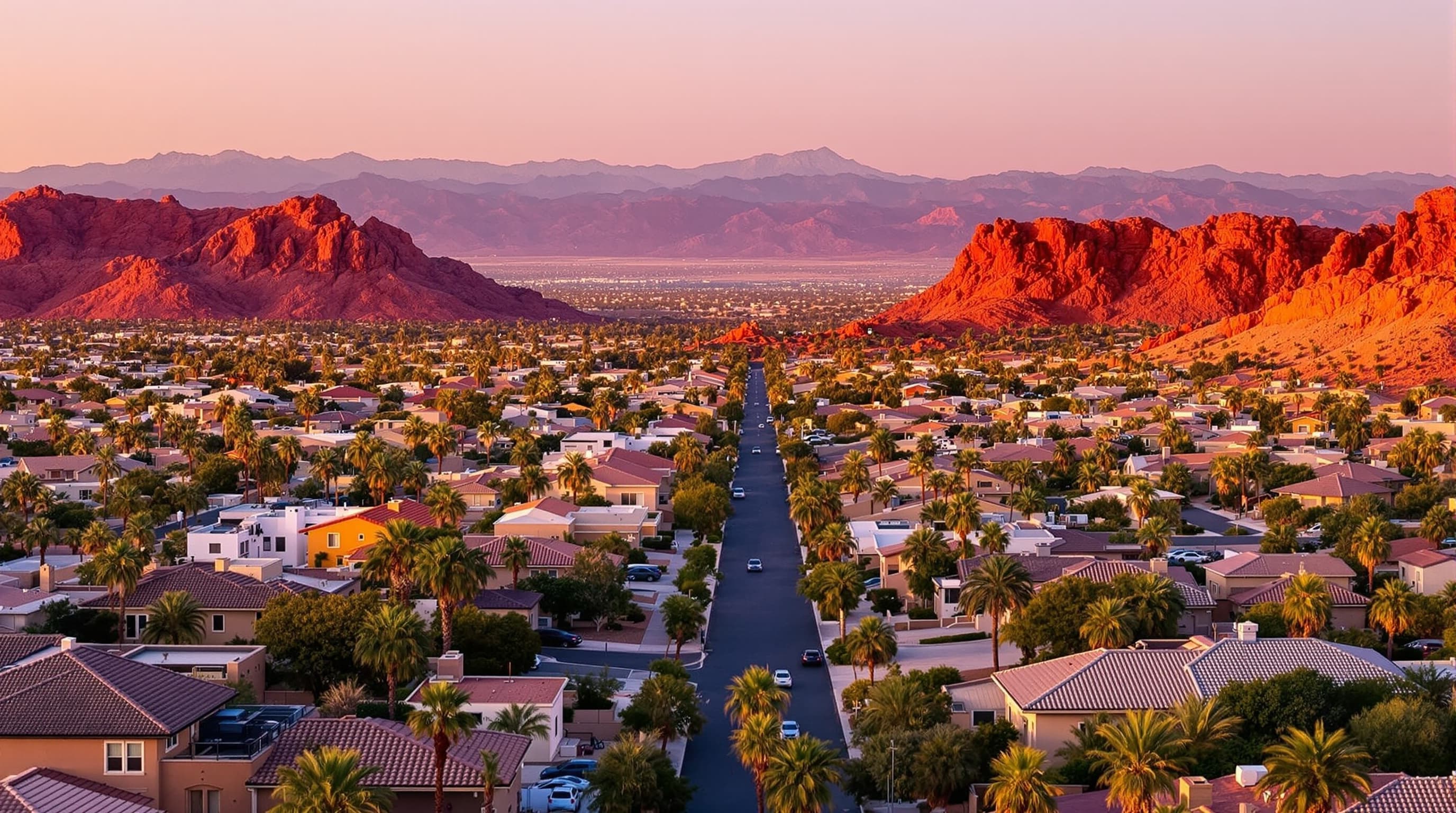
Beneath the shimmering heat and the traffic-choked surface streets of the Las Vegas Valley lies a hidden, concrete anatomy designed for one critical purpose: moving water. We live in a desert, but that's precisely what makes flooding so dangerous here. The flood control system running under and around this city is massive, largely unseen, and as vital to the valley's existence as the power grid. It has also been, for decades, the backdrop to one of the more quietly devastating chapters in Las Vegas history.
A Desert Basin Primed for Flash Floods
Las Vegas sits in a topographic bowl, surrounded by mountain ranges on multiple sides. When the intense, localized monsoon rains hit between July and September, the water has nowhere to go but down — fast. Dry arroyos that look like gravel drainage ditches on a Tuesday can become violent, debris-choked rivers within minutes of a storm cell moving over the mountains to the west or north.
This is not a hypothetical. The valley has seen flash floods kill people in their cars, wash out roads, and push walls of water through neighborhoods with almost no warning. The Clark County Regional Flood Control District (CCRFCD) and the Southern Nevada Water Authority together maintain over 600 miles of flood channels, retention basins, and underground tunnels specifically engineered to capture and redirect this runoff — protecting homes, businesses, and roadways that would otherwise be inundated on a regular basis.
The system works, most of the time. But it only works if people stay out of the channels when it counts.
The Tunnels: Utility and Refuge
The most dramatic components of the flood system are the large-diameter tunnels running beneath the Strip, downtown, and various parts of the valley. These are serious infrastructure — wide concrete corridors engineered to carry enormous volumes of stormwater at high velocity. On dry days, they are dark, quiet, and still.
For a span of years, they were also home to hundreds of people.
As Las Vegas boomed in the late 1990s and 2000s and housing costs made homelessness an increasingly visible crisis, a population of unhoused residents discovered that the flood tunnels offered something rare: shelter from the brutal sun, relative privacy, and a measure of stability. People built out their spaces — shelves of books, furniture hauled in piece by piece, even electricity tapped from surface infrastructure in some areas. Communities formed in the dark.
Photographer and journalist Matthew O'Brien documented this hidden world extensively, publishing his findings in the book Beneath the Neon: Life and Death in the Tunnels of Las Vegas. His work put a human face on people that the surface city often preferred not to see. The residents he documented were not abstract — they were people navigating addiction, mental illness, economic collapse, and the absence of adequate housing options, surviving in the only space available to them.
The risk was always there and always acute. A flash flood in the tunnels is not survivable. The surge happens with little warning, and the forces involved are incompatible with human life. Over the years, people did die in the tunnels during flood events.
Sealing the Channels
In the years following O'Brien's documentation and subsequent media attention, authorities moved to address the encampments. Large metal gates and barriers were installed at tunnel access points. Outreach efforts, varying in consistency and funding, were made to connect tunnel residents with services. The encampments were eventually cleared from the major tunnels.
This was a contested process. Advocates argued — not without cause — that clearing the tunnels without providing adequate housing alternatives simply moved the problem rather than solved it. Others pointed to the genuine and serious flood danger as justification for permanent closures. The infrastructure itself demanded it: a flood control system cannot function with people living inside it.
The human dimension of this story doesn't have a clean resolution. The people who lived in the tunnels didn't disappear when the gates went up. The same structural failures — housing costs, mental health resources, addiction treatment availability — that drove people underground in the first place haven't been fully addressed. What changed is where the crisis is visible, not whether it exists.
Monsoon Season: What Locals Need to Know
For those of us living above ground, the flood channel system is a background presence — until monsoon season arrives and suddenly it matters very much. July through September is the window. Storms can be intensely localized, dropping an inch of rain on one neighborhood while leaving another a mile away completely dry. The mountains to the west and north can receive heavy rain that sends water racing down washes into the valley with almost no visible warning at the lower elevation.
The rules are simple and not negotiable:
- Never enter a wash or flood channel during a rainstorm or when rain is forecast upstream. The catchment area for a single wash can cover dozens of square miles. Clear skies directly above you mean nothing.
- Never attempt to drive through a flooded road. "Turn Around, Don't Drown" is the official slogan for a reason. A foot of moving water can push a car. Two feet will carry it. The road surface beneath the flood may no longer be intact.
- Water rises faster than it looks. What appears as a few inches of flow can become a raging torrent within minutes as upstream water reaches your location.
Practical Steps for Valley Residents
If you live near a wash or low-lying area, build these habits before monsoon season starts:
- Sign up for CodeRED (Clark County's emergency alert system) so you receive flash flood warnings directly to your phone. Don't rely solely on weather apps — localized storm events can outrun general forecast models.
- Know your nearest evacuation route. If your neighborhood has a wash adjacent to it, identify which streets are most likely to flood and what your alternate route out looks like.
- Park your vehicle away from washes and low spots when storms are forecast. Vehicle losses in flash floods are common and often avoidable.
- Check the CCRFCD's interactive flood hazard map at ccrfcd.org to see how your property relates to mapped flood zones. This matters for insurance as well as safety.
- If you see someone in a flood channel during a storm, call 911. Do not attempt a rescue yourself. Water rescue in a flash flood scenario requires specialized equipment and training.
The Bigger Picture
The flood system under Las Vegas is a genuine engineering achievement that makes the valley habitable. It is also a reminder that we live in a desert where water, when it does come, arrives with indiscriminate force. The tunnels that became home to hundreds of people are now sealed and cleared. The monsoon rains still come every summer. The channels still fill. And the valley keeps expanding into land that, without this infrastructure, would regularly flood.
Respecting the flood system means understanding what it is, what it isn't, and what it cannot protect you from if you ignore it. The desert doesn't negotiate.